Hello, and welcome to my blog!
I will be creating six 500-word blog posts on the topic of the politics of water and development in Africa over the next few months. I hope you enjoy reading them.
First of all, what is water and development?
Water is a vital resource for human survival and is essential for many large-scale activities, including agriculture, industry, and energy production. In 2020, hydropower supplied 17% of global electricity generation, the third largest source after coal and natural gas.
On a smaller scale, water is fundamental for good health and sanitation. In 2010 the UN General Assembly explicitly recognised the human right to water and sanitation. Yet despite this recognised right as of 2022 2 billion people lack access to safely managed drinking water. Additionally, 3.6 billion people, nearly half of the world's population, do not have access to safely managed sanitation in their home.
Thus, the availability and management of water plays a significant impact on a region's economic and social development. In areas where water is scarce or poorly managed, it can be a major limiting factor for development. Meanwhile, effective water management and investment in water infrastructure can support economic growth and improve the quality of life for people.
And why Africa?
These intersecting factors have resulted in Africa being a place of significant growth and change which has attracted both Western and non-Western development in what has been coined
The New Scramble for Africa. Put very simply Africa is a melting pot of human and physical activity.
So why did I pick this theme?
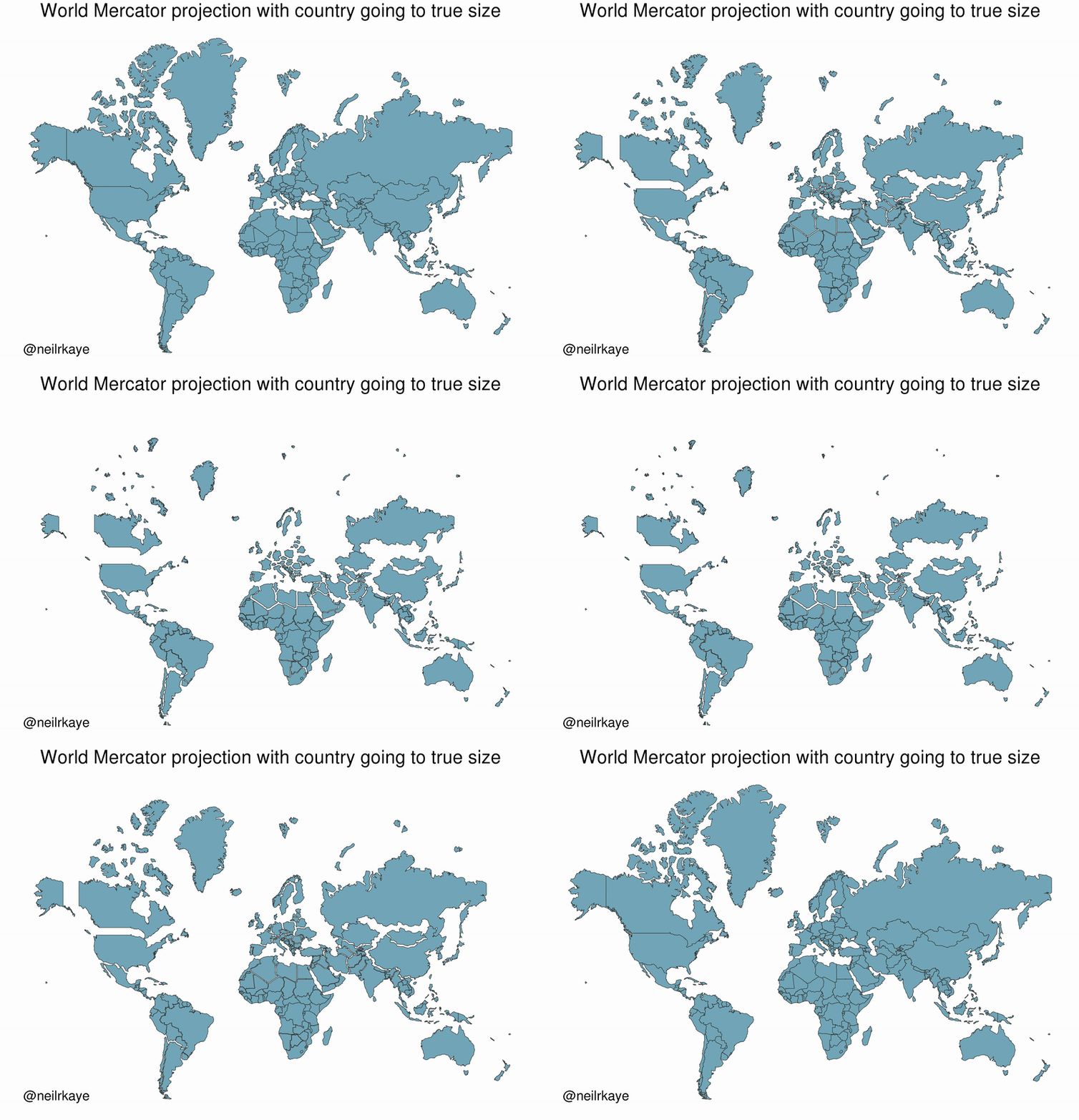
Before starting this course I was not aware of the multifaceted nature of water and development in Africa. I wanted to learn more about the relationship between these two geographical processes. Furthermore, I wanted to learn more about Africa given its often disregarded size (see the image below by Neil Kaye), and the multitude of different cultures, regions, and histories that are not talked about enough in Western discourse.
Additionally, I wanted to learn about how to write about Africa in a respectful way as a non-African. First and foremost, I will strive not to make stereotypes of Africa that have been dominant in Western narratives exemplified in Wainaina’s satirical 2006 piece. I will try to focus on research and examples from African academics instead of relying predominantly on Western research and acknowledge the complexity of African culture and history. Furthermore, I recognise that these blog posts will only scratch the surface of this topic in Africa, and there are many many more stories to tell.
So… what to expect?
Firstly, it is not possible to talk about African politics without talking about Africa’s history. Therefore, the next blog will focus on a brief history of Africa and the resulting political environment. Later on, the posts will focus on the politics of both large- and small- scale water development across Africa.


Comments
Post a Comment